Best AI tools for image text remover
An image text remover that looks “fine” at thumbnail size can fall apart at 100% zoom. The hard part isn’t deleting letters—it’s rebuilding what the text covered so edges stay straight, textures continue naturally, and lighting doesn’t jump.
Most people start with an ai text remover from image as their first image text remover because it’s fast. When quality matters, a text remover image workflow with mask control and a few reruns usually beats one-click results. And when you need volume, an ai remover text image setup only helps if you can spot failures quickly and route tough images to a manual path.
This guide breaks down the best AI tool categories for an image text remover, shows what to look for, and gives you a repeatable text remover image process you can use with any ai text remover from image.
Quick routing rule for any image text remover:
- Start with an ai text remover from image for clean backgrounds and obvious overlays.
- Switch to a text remover image brush workflow when the overlay crosses edges, hair, UI borders, or patterns.
- Scale into an ai remover text image workflow only after you define QA gates and a manual fallback.
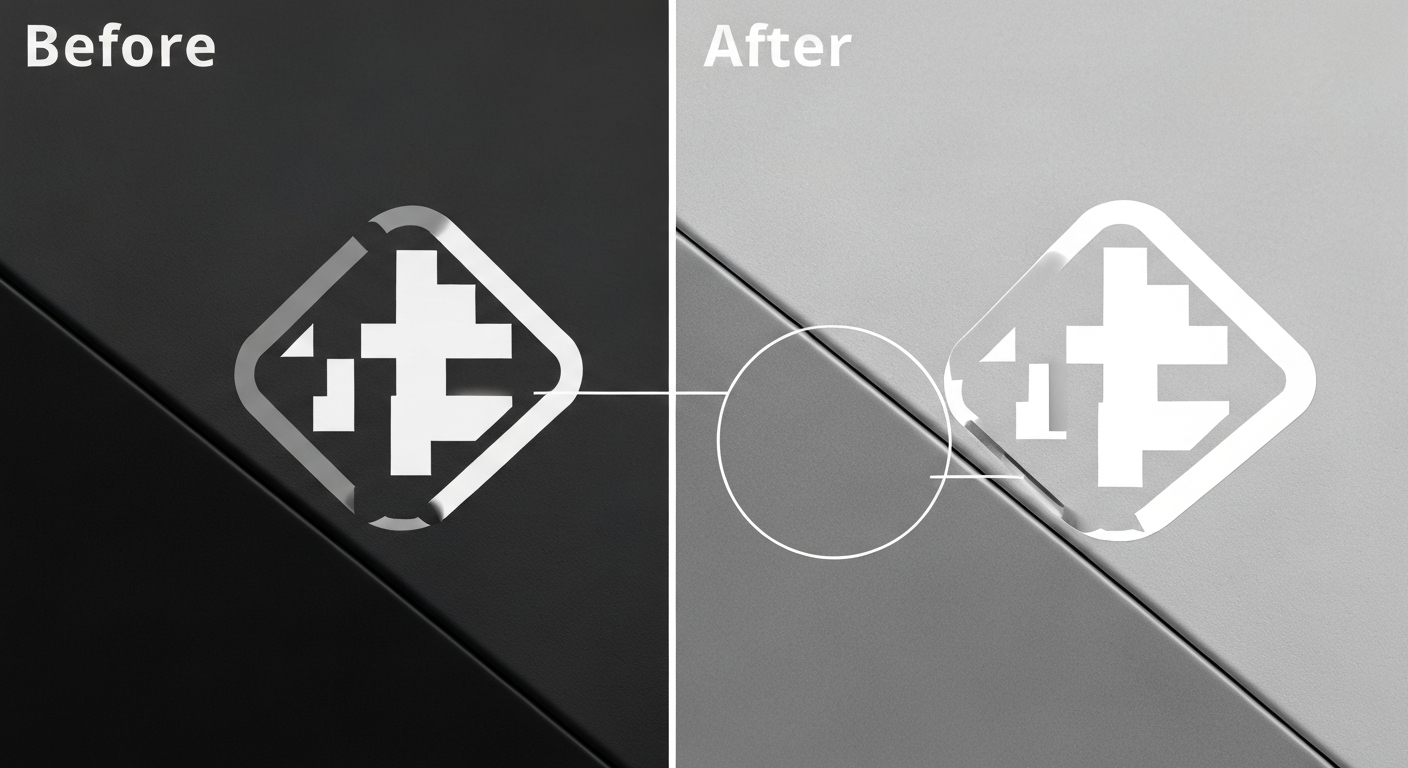
Search intent: what people mean by “image text remover”
People use image text remover as the umbrella term. They search ai text remover from image when they want a one-click web or phone edit. They type text remover image when they want brush control and iterative cleanup. They look for ai remover text image when they want batch processing, automation, or an API-style workflow.
If a query includes “text remover image,” it often signals “I need control,” not “I need a different model.” The same inpainting problem shows up in every image text remover—only the masking, iteration speed, and export quality change.
How an ai text remover from image works (mask + inpainting)
Almost every image text remover is built on inpainting:
- The tool detects text (or you paint a mask).
- The model generates replacement pixels that match surrounding context.
- You rerun with a tighter mask until the patch disappears at your final output size.
That’s why the “best” ai text remover from image isn’t just the one with the strongest fill. The best image text remover also gives you:
- A reliable way to include shadows, strokes, glow, and blur in the mask (common reasons a text remover image leaves halos).
- Multiple fill attempts (because the first generation is often the wrong texture match).
- Full-resolution exports (downscaling can make an ai text remover from image look better than it really is).
One practical tip for any text remover image workflow: smaller, more accurate masks usually beat large, lazy masks. Remove a little, check, then expand.
When not to use an image text remover (rights + redaction)
Before you choose an image text remover, be clear about intent:
- Watermarks and ownership marks: removing them can violate rights or platform rules. If you don’t have permission, don’t use an ai text remover from image for that.
- Security/redaction: an image text remover is not redaction. If you must hide sensitive info, use solid overlays and flatten exports.
- Brand/legal text: if the content matters (claims, disclaimers, regulated details), re-export from the source design instead of relying on a text remover image patch.
What to look for in the best image text remover
Use this checklist to pick the right image text remover for your images, not just a good demo:
- Mask control: a strong text remover image editor lets you brush, expand, shrink, feather, and undo quickly.
- Effect coverage: the image text remover should handle outlines, drop shadows, glows, and semi-transparent text, not only solid glyphs.
- Texture continuity: wood grain, fabric, hair, and sky gradients reveal weak ai text remover from image fills fast.
- Edge integrity: UI borders, product outlines, and straight lines show wobble when a text remover image model “bends” structure.
- Resolution and compression: test your image text remover at the exact export size you’ll publish.
- Iteration speed: the best ai text remover from image results often come from 2–4 fast reruns with minor mask tweaks.
- Privacy and workflows: upload-based image text remover tools may be a deal-breaker for sensitive images; local options trade convenience for control.
Build a tiny test set before committing to any image text remover:
- One flat background (studio sweep, sky gradient)
- One edge-heavy image (hair, UI header, thin lines)
- One texture-heavy image (fabric, brick, grass)
Run each ai text remover from image on the same three images and judge at 100% zoom.
Quick troubleshooting for ai text remover from image results
If your image text remover output looks “almost right,” small changes usually fix it faster than switching tools:
- If an ai text remover from image leaves a halo, expand the mask slightly to include the shadow/outline, then rerun.
- If an ai text remover from image smears texture, try a smaller mask and generate a few fills; pick the best texture match, not the smoothest patch.
- If your image text remover bends straight edges, move to a higher-control image text remover (selection + heal/clone) for the last-mile cleanup.
- If an ai text remover from image looks good only after downscaling, it’s not the right image text remover for product photos or UI.
- If you need speed on a batch, treat the ai text remover from image step as a draft and route failures into a text remover image brush workflow.
- If one background type keeps failing, split the batch and use a different image text remover tier for that subset.
Best AI tools for image text remover (grouped by workflow)
There isn’t one best image text remover for every job. Pick the category that matches your failure tolerance and your quality bar.
1) One-click online ai text remover from image tools (fast drafts)
These tools are best when the overlay is obvious and the background is forgiving, and you need a fast image text remover. They’re the fastest way to test whether your image text remover task is “easy” or “needs control.”
Common one-click options people use as an image text remover:
- Pixelbin
- Photoroom
- SnapEdit
- Fotor
- PicsArt
- Pixelcut
- MagicEraser
- Krea.ai
- EzRemove
How to evaluate a one-click image text remover (ai text remover from image) quickly:
- Test full-resolution export (not just preview).
- Rerun with a slightly expanded mask to capture shadows.
- Check for texture repeats (tiles) and over-smoothing.
If a one-click ai text remover from image leaves halos or smears detail, don’t keep rerunning blindly—switch to a text remover image tool with mask refinement.
2) Brush-first text remover image editors (best control-per-minute)
When the overlay crosses detail, brush masking usually wins. A text remover image brush workflow is often the cleanest image text remover for outlined lettering, shadowed text, or semi-transparent overlays where auto-detection often misses the “effect” around the text.
Good fits for a brush-first image text remover approach:
- Cleanup-style web editors that let you paint and rerun quickly
- Inpaint-focused apps where the core loop is mask → fill → inspect → repeat
Small workflow upgrades that improve any text remover image result:
- Keep masks tight and deliberate.
- Remove shadows in a second pass (many ai text remover from image tools miss them).
- Match grain/noise before export so the fill doesn’t look “too clean.”
3) Design suites (text remover image + layout in one place)
If removal is just one step in a marketing workflow, design suites can be the most efficient image text remover. You remove the overlay and keep designing in the same canvas.
They can also be a convenient ai text remover from image step when you’re already designing, but always QA the final image text remover export.
Typical picks:
- Canva
- Adobe Express
These are best for web-first assets. For print or UI screenshots, a dedicated text remover image workflow often holds up better under scrutiny.
4) Pro editors (highest-quality image text remover for hard cases)
When the result must survive close inspection, pro editors are the precision option. The advantage isn’t “more AI”—it’s the combination of AI fills with manual tools for cleanup.
Typical pick:
- Adobe Photoshop (selection control + AI fill + heal/clone for the last 5%)
Use a pro image text remover when:
- Straight lines must stay straight (UI, packaging, architecture).
- The background is structured (patterns, repeating textures).
- You need layer-based, non-destructive edits.
5) Mobile tools (a convenient ai text remover from image)
Phone-native removal can be a handy ai text remover from image for speed, but consistency depends on export paths and image type. Treat mobile image text remover edits as drafts, then QA on a desktop for important assets.
If you use mobile as an image text remover, always:
- Check at 100% zoom
- Verify the final exported dimensions
6) Local and automated workflows (ai remover text image at scale, no uploads)
If you can’t upload images, local inpainting is a viable route. An ai remover text image workflow can run on your own hardware and keep files in your storage.
Trade-offs for an ai remover text image setup:
- Pros: privacy control for an ai remover text image workflow, automation, consistent outputs when the inputs are consistent
- Cons: setup time, fewer guardrails, and more responsibility for QA
An ai remover text image workflow is still an image text remover at heart: mask quality and QA decide the final look. Start with a small ai remover text image workflow pilot before you automate everything.
An ai remover text image pipeline that actually reduces work (instead of creating rework) usually includes:
- ai remover text image inputs: normalize resolution and output format so results compare cleanly
- ai remover text image masking: define how masks are created (auto-detect, manual markup, templates) and how they expand to include shadows
- ai remover text image QA gates: fail fast on edge wobble, texture repeats, blur, and banding
- ai remover text image fallback: route failures into a text remover image editor without losing context
If you’re standardizing an ai remover text image workflow, keep one “gold standard” image text remover available for difficult manual fixes.
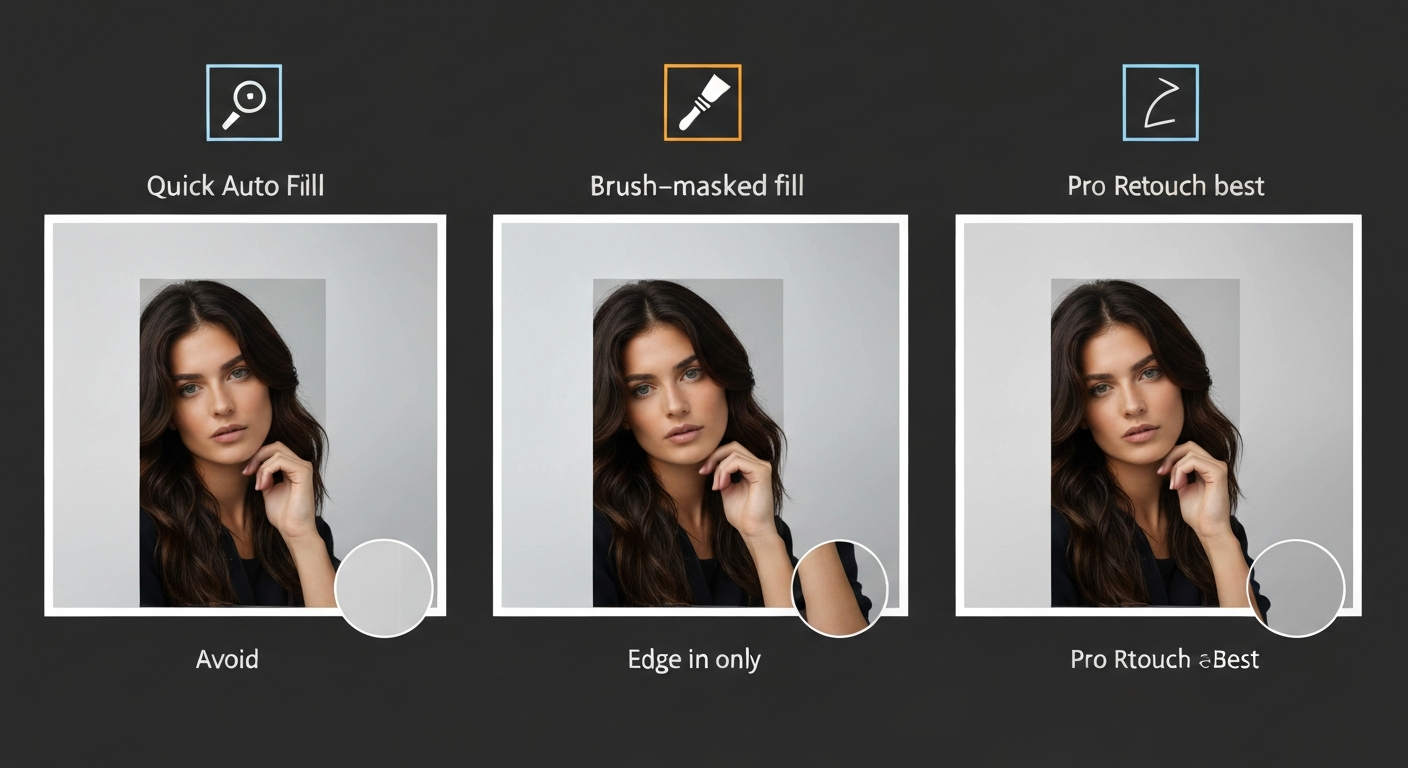
Comparison: one-click vs brush masking vs pro editing vs ai remover text image pipelines
Most options fall into four buckets. The best image text remover is the bucket that matches how you’ll handle failures.
One-click auto tools
- Best for: obvious overlays on simple backgrounds
- Strength: speed and low effort
- Weak spot: edges, shadows, semi-transparent text, patterned surfaces
Brush masking (manual retouching)
- Best for: textured backgrounds and careful edge work
- Strength: control over the mask and the filled region
- Weak spot: slower; needs basic retouching judgment
Pro editors (precision workflows)
- Best for: e-commerce, UI screenshots, print, brand assets
- Strength: combines AI fills with manual tools for clean finishes
- Weak spot: time and learning curve
Pipelines and APIs (ai remover text image at scale)
- Best for: teams removing the same overlay across many images
- Strength: consistency and throughput
- Weak spot: hard images still need a manual path
An ai remover text image pipeline is only worth it when it makes failures obvious and reduces manual touch time.
If you’re choosing between an ai text remover from image and an ai remover text image workflow, treat both as an image text remover draft until your QA checks pass.
Mini case scenarios (how teams use an image text remover in practice)
Case 1: E-commerce promos across 60 product photos
A merch team needs to remove “SALE 20%” badges from last month’s images. They start with an ai remover text image web tool for speed. It works on half the set, but fails where badges overlap textured packaging.
Practical approach:
- Run an ai remover text image batch for the easy images.
- Spot-check early to catch downscaling and blur (common ai text remover from image issues).
- Route edge-heavy images to a manual text remover image workflow.
- Track repeated failures (halos on gradients, warped edges) and add checks to your routing.
- QA every image text remover result at 100% zoom on a sample plus every image with thin lines or gradients.
Here, the “best” option is the one that fails safely: it’s easy to re-mask and rerun without creating new artifacts.
Case 2: UI screenshots with timestamps and overlays
A product team wants clean UI screenshots for documentation. A quick removal step deletes the timestamp, but introduces a halo on the app header gradient.
Practical approach:
- Use a precision editor and keep the mask tight.
- Generate a few fill variations.
- Finish with a light heal/clone pass to restore gradient smoothness.
Step-by-step framework: a repeatable text remover image workflow
Use this process whether you’re using a browser tool, a full editor, or an ai remover text image pipeline.
The goal is the same for any image text remover: the edit should disappear at your final export size.
- Inspect the overlay: solid text, outlined text, shadowed text, and semi-transparent text all need different masks.
- Pick the right tier: start with an ai text remover from image for easy backgrounds, switch to a text remover image brush for edges, and reserve an ai remover text image workflow for batches.
- Mask the full effect: include outlines and shadows, not just the solid letters.
- Generate multiple fills: pick the best texture match, not the smoothest patch.
- Fix edge artifacts: tighten the mask around borders and rerun if you see warping.
- Match grain and compression: a too-clean fill looks fake on noisy photos.
- Validate at final size: check at 100% zoom and at the export resolution you’ll publish.
- Lock exports: export once in the target format to avoid extra compression damage.
Practical checklist: before you export a text remover image result
- Does your image text remover fill match surrounding grain/noise?
- Are straight lines still straight after the image text remover pass (especially in UI screenshots)?
- Any halos left from semi-transparent text or drop shadows that the image text remover didn’t include in the mask?
- Do gradients stay smooth (no banding or blotches) in the image text remover output?
- Do nearby edges stay natural (no warping or wobble) after you rerun the image text remover?
- Did the text remover image workflow miss small characters or punctuation?
- Are output dimensions consistent across a batch (especially in an ai remover text image workflow)?
FAQs
Is an image text remover the same as a watermark remover?
The tools can overlap, but the intent matters. An image text remover is meant for cleaning visible overlays and reconstructing the background. For ownership marks, get permission before removing them.
Why does an ai text remover from image leave a blurry patch?
Common causes are downscaled exports, heavy compression, or a fill that can’t rebuild fine texture. Export at full resolution, tighten the mask, and rerun. If you still see smudging, switch to a text remover image tool with manual control.
Can a text remover image tool handle patterned fabric or brick walls?
Yes, but it’s the hardest case. Auto-detect tends to struggle. A manual brush workflow with a few fill attempts usually produces the most believable result.
How do I remove text from lots of images consistently?
Use an ai remover text image workflow with batch support plus QA gates: normalize size, spot-check at 100% zoom, and route hard images to a full editor. Keep one strong image text remover available for the manual fixes.
Is it safe to use an ai remover text image tool for redaction?
No. If you need to hide sensitive information, use real redaction (solid overlays and flattened exports). Text removal is for visual cleanup, not security.
Should I build an ai remover text image pipeline or use a text remover image editor?
Use a text remover image editor when quality is the priority and the set is small enough to handle manually. Build an ai remover text image pipeline when volume is the priority and you can define QA gates, clear failure routing, and at least one “gold standard” image text remover for the difficult cases.
If you want a simple way to test removals on real overlays and export a clean result, start with an online image text remover and run the checklist above before you batch anything.